1. Introduction
Human trafficking is a profound violation of human rights and a persistent threat to global security, social stability, and economic development. Around the world, millions of people are coerced, deceived, or forced into exploitative situations each year. The United Nations Office on Drugs and Crime (UNODC) reports that after a dip during the COVID-19 pandemic, the number of detected trafficking victims surged by 25% in 2022 compared to pre-pandemic levels, with children and women comprising the majority of victims.1 This resurgence is driven by a convergence of factors: economic hardship, ongoing conflicts, climate change, and the rapid evolution of organized crime.
Vietnam, with its strategic geographical location and deep integration into regional migration flows, is both a source and transit country for trafficking victims. This criminal enterprise has evolved from traditional cross-border smuggling into sophisticated digital operations, exploiting the country’s economic vulnerabilities and geographic position. They target the most vulnerable groups including women, children, ethnic minorities, impoverished workers, and more recently, men and members of the LGBTQI+ community. Vietnamese citizens are trafficked to countries such as China, Cambodia, Laos, Myanmar, and beyond for exploitation. Despite government efforts and international cooperation, the problem persists, increasing in sophistication with the adoption of new technologies and changing global dynamics.
2. The definition
Human trafficking is defined by the UNODC as “the recruitment, transportation, transfer, harboring or receipt of individuals through various manipulative or coercive means.” 2 These include the use of force, threats, coercion, fraud, abuse of power, or exploitation of a person’s vulnerability, all with the intent of exploitation.3 Exploitation may include forced labor, prostitution, forced marriage, organ trafficking, sexual slavery or other forms of illegal labor. This crime affects men, women and children of all ages and from all backgrounds, occurring in every region of the world.4
3. The Global Landscape
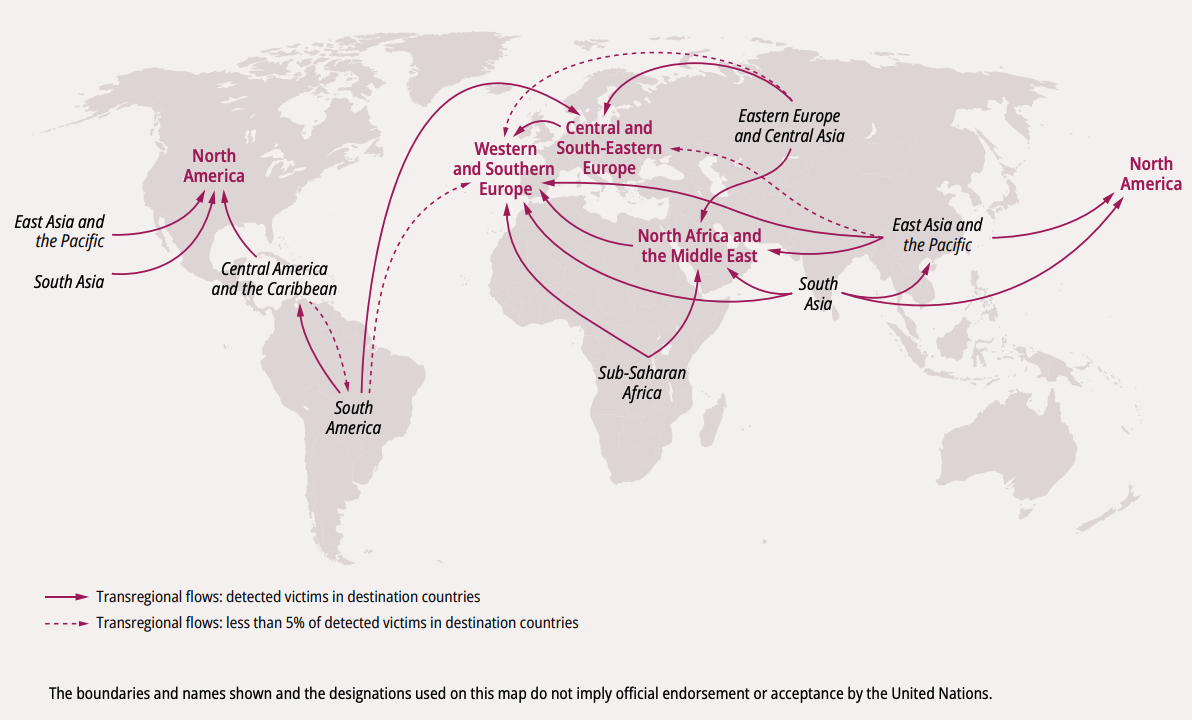
The flow. Human trafficking follows predictable patterns worldwide. The UNODC identifies a clear trend: victims typically flow from economically disadvantaged regions to wealthier destinations. Lower-income countries serve as source nations, while developed economies become destination countries where victims face exploitation in industries ranging from agriculture to sex work.
Figure 1: Main transregional flows of human trafficking
Source: UNDOC. Global report on Trafficking in persons 2024.
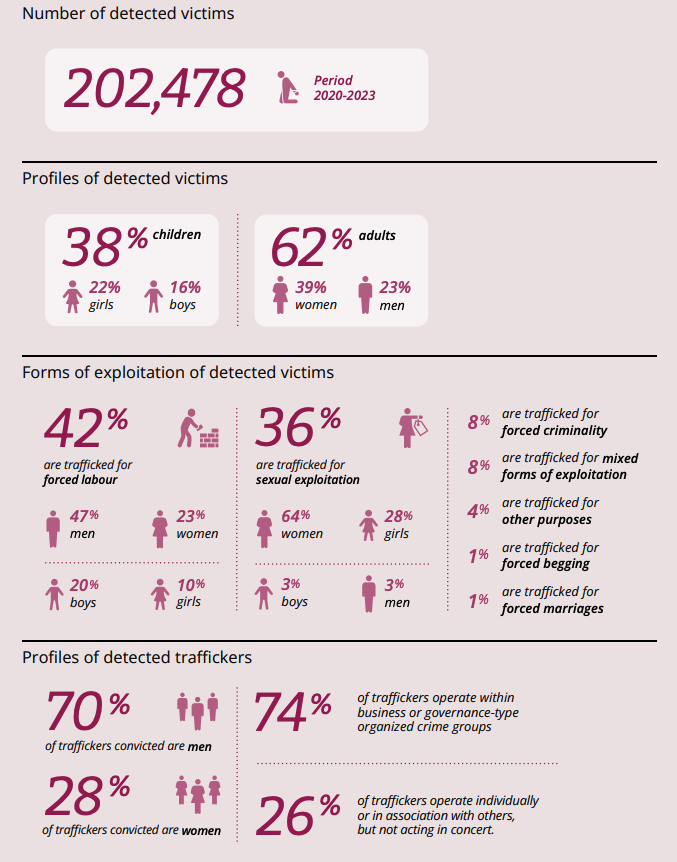
Rising Numbers and Changing Victim Profiles. Globally, human trafficking is evolving in both scale and complexity. After a brief decline during the pandemic, detection rates rebounded sharply. In 2022, women and girls accounted for 61% of all detected victims, with a particularly alarming 38% increase in the number of girls trafficked over just three years. Children now comprise an increasing share of victims, especially in regions affected by conflict and displacement.5
Figure 2: The world’ human trafficking situation in number
Source: UNODC. Global Report on Trafficking in Persons 2024.
Forms of Exploitation: While sexual exploitation remains a dominant form of trafficking, forced labor has now overtaken it as the most common form globally. According to the 2024 UNODC Global Report, 42% of detected victims between 2020 and 2023 were trafficked for forced labor, while 36% were trafficked for sexual exploitation. New forms of exploitation are also emerging, including forced criminality, where victims are compelled to participate in online scams and other illicit activities.
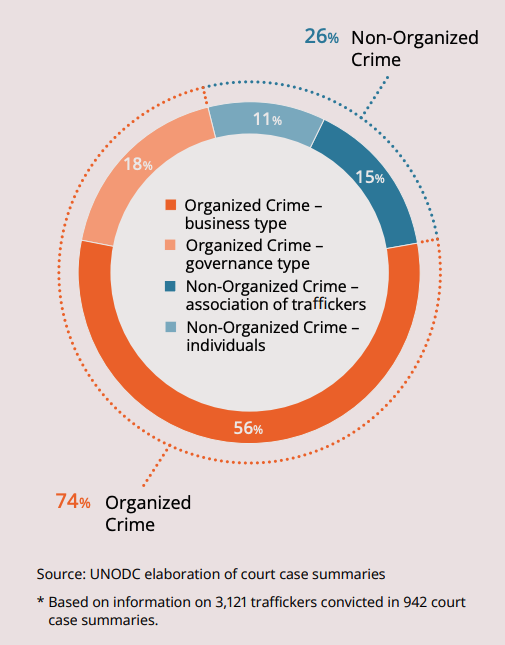
The Role of Organized Crime: Human trafficking is increasingly perpetrated by organized criminal groups. These networks operate across borders, leveraging technology and exploiting legal loopholes to evade detection and prosecution. In 2022, 74% of traffickers operated within business or governance-type organized crime groups, while only 26% acted individually or in loose associations.
Figure 3: Type of traffickers’s structure reported in case narratives, by number of individuals convicted.
Source: UNDOC. Global Report on Trafficking in Persons 2024.
4. East Asia and the Pacific: A Regional Hotspot
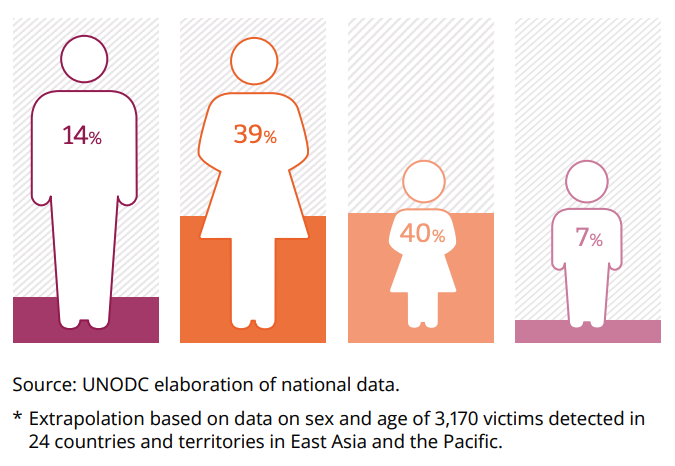
The East Asia and Pacific region6 accounts for a significant portion of global trafficking cases. Unlike other regions where adult women comprise the majority of detected victims, this area shows more diversity in victim demographics, with substantial numbers of men and children also falling prey to traffickers.
The region’s rapid economic development has created both opportunities and vulnerabilities. While economic growth has lifted millions out of poverty, it has also created demand for cheap labor and widened inequality gaps that traffickers exploit. Cross-border labor migration, much of it irregular, provides cover for trafficking operations.
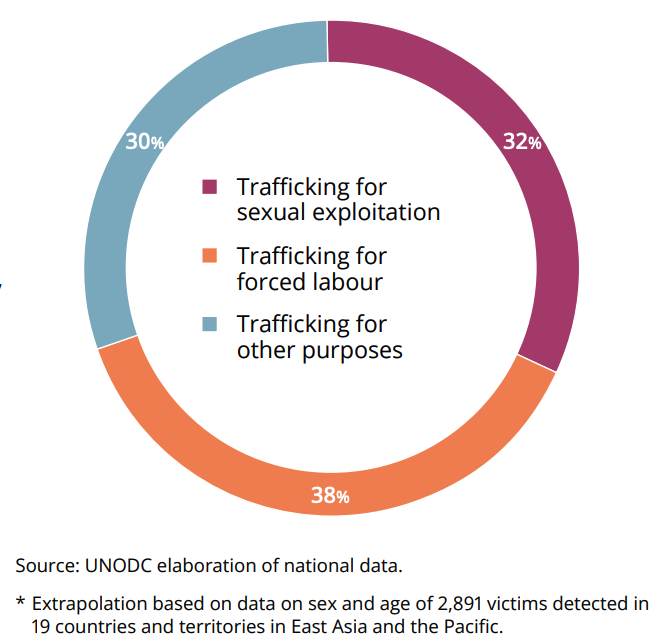
Figure 4: Shared of trafficking victims in East Asia and the Pacific, by age group and sex, 2022 (or most recent) | Figure 5: Shared of trafficking victims in East Asia and the Pacific, by form of exploitation, 2022 (or most recent) |
 |  |
| Source: UNODC. Global Report on Trafficking in Persons 2024. |
Figure 6: Trafficking flows from East Asia and the Pacific to other regions, 2022 (or most recent)
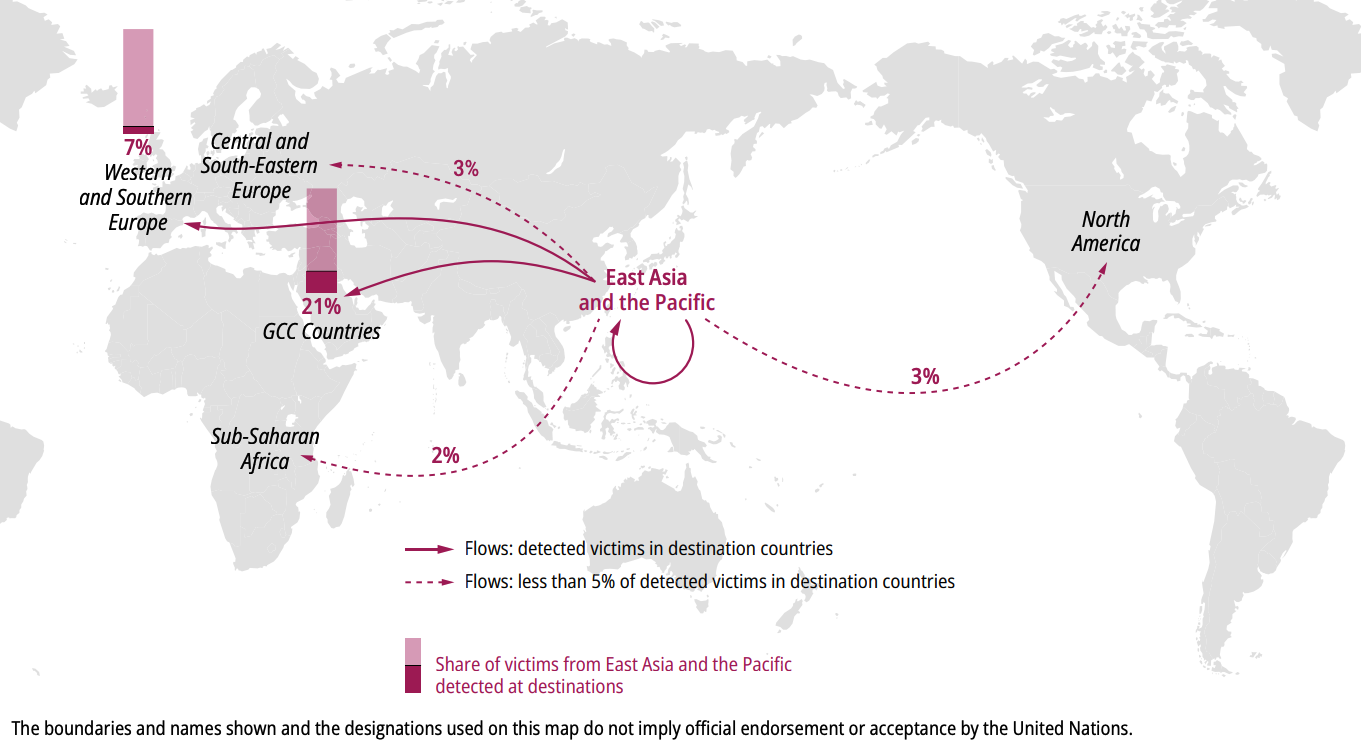
Source: UNDOC. Global Report on Trafficking in persons 2024.
5. Vietnam’s Human Trafficking situation: Trends and Realities
Vietnam’s trafficking landscape reflects these broader regional patterns while exhibiting unique characteristics shaped by its geography, socio-economy, and recent history. Over the past decade, the country has experienced significant shifts in trafficking patterns, with COVID-19 serving as a catalyst for change.
The Impact of COVID-19 and Economic Shocks: Vietnam’s strong response to COVID-19 came with significant economic challenges. In 2020, the economy slowed sharply, with over 32 million people experiencing job or income loss. Ethnic minority households were hit hardest, reporting higher rates of job loss and financial hardship than the majority population.
As a result, many people migrated internally or across borders in search of work, increasing their vulnerability to trafficking. Although the economy began to recover by 2022, rural and border communities continued to face setbacks.7 The completion of a barged-wire border fence along the China–Vietnam border in 2021 further disrupted traditional migration and trade, forcing vulnerable groups to seek riskier routes and new destinations.8
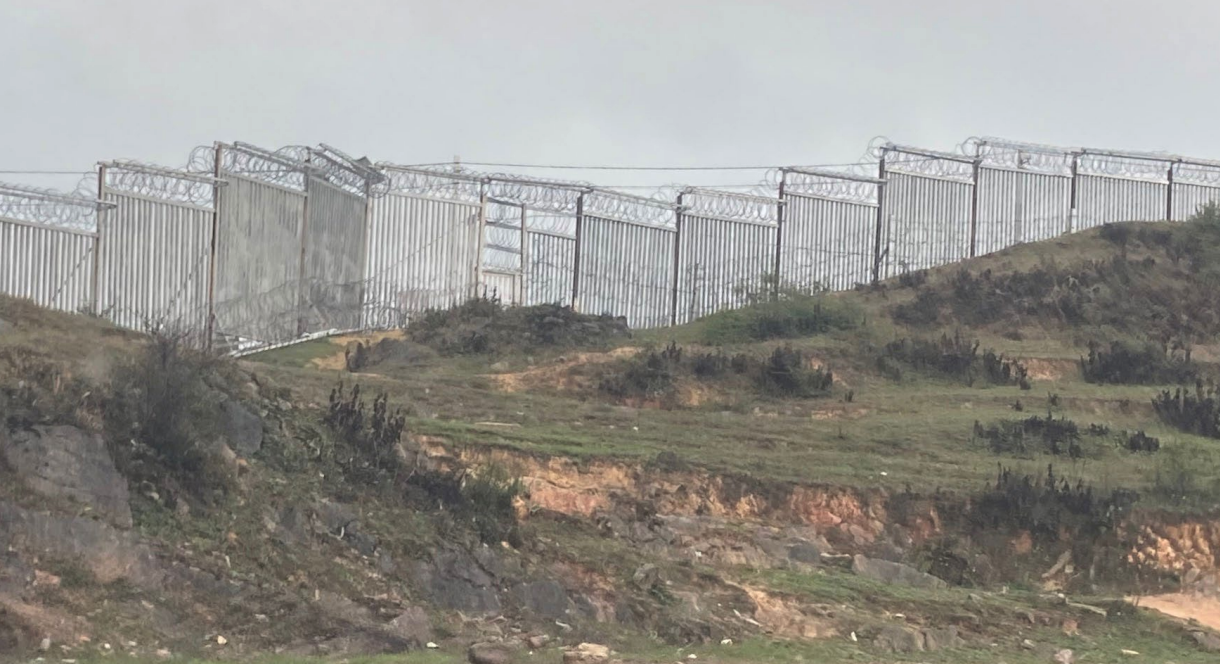
China’s ‘mega fence’, seen here in Ha Giang, runs for more than 1,000km along its border with Vietnam, Laos and Myanmar. Image by Blue Dragon Foundation.
Shifting Trafficking Patterns: More Destinations, Broader Risks
Over the past decade, the scale and nature of human trafficking in Vietnam have shifted dramatically. According to the Ministry of Public Security, from 2010 to 2021, nearly 7,500 victims were trafficked in approximately 3,500 cases, with 75% of the victims trafficked to China, women and girls representing the majority.9
However, since the pandemic and the completion of the China border fence, trafficking patterns have diversified.
- China remains a major destination, but the number of victims trafficked there has declined since 2021. In 2022, only 44% of victims assisted by Blue Dragon Children’s Foundation had been trafficked to China, down from 95% pre-pandemic.
- Cambodia and Myanmar have emerged as new hotspots, particularly for labor exploitation and forced criminality in online scam operations. In 2022, 26% of victims supported by Blue Dragon had been trafficked to Cambodia, and 19% to Myanmar.10
- Domestic trafficking is on the rise, with street children and rural migrants at high risk of labor and sexual exploitation in urban centers.
Forms of Exploitation: Old and New
Contemporary trafficking in Vietnam encompasses diverse forms of exploitation that reflect both traditional patterns and emerging opportunities:
- Sexual Exploitation and Forced Marriage: Vietnamese women and girls continue to be trafficked for forced marriage and sexual exploitation, driven by demographic imbalances and cultural preferences in neighboring countries, notably China.11
- Labor Exploitation and Forced Criminality: Men and boys are increasingly targeted for forced labor, particularly in scam compounds in Cambodia and Myanmar, where victims are coerced into online fraud schemes under threats of violence and debt bondage.The isolation of these compounds and the international nature of their operations make rescue extremely difficult.12
- Domestic Trafficking: There is a resurgence of trafficking within Vietnam, with street children and rural migrants at high risk of labor and sexual exploitation in urban centers.13
- Emerging forms:
- Forced Labor on Fishing Vessels: Men are deceived with promises of legitimate maritime employment, only to find themselves trapped on fishing boats under brutal conditions with minimal or no pay. Isolation at sea makes escape nearly impossible.14
- Trafficking of Pregnant Women and Newborns: Criminal networks exploit vulnerable pregnant women, either trafficking them to give birth and sell their babies,15 or stealing newborns through fake charitable organizations.16 This represents one of the most disturbing developments in modern trafficking.
- Online Fraud Operations: The proliferation of online platforms has created new opportunities for both recruitment and exploitation. Victims are lured through social media with fake job offers, friendship or romance, then forced to participate in online scams.17
Raising awareness video by Hagar Vietnam.
Geographic Concentration and Border dynamics
Trafficking is highly concentrated along key border zones—in particular, the northern provinces bordering China and the Golden Triangle Special Economic Zone (SEZ), spanning parts of Laos, Thailand, and Myanmar. The “Golden Triangle”18 has become infamous for illicit cross-border activities, including human trafficking, online scams, and drug-related crimes. Victims in these areas are subjected to forced labor, sexual exploitation, and coerced participation in fraudulent schemes or drug trafficking at casinos, gaming establishments, and online businesses.19
Digital Recruitment Revolution
The rise of social media and digital platforms have revolutionized how traffickers recruit victims. A simple Facebook search for “Cambodia jobs” yields numerous groups advertising positions with monthly salaries exceeding 20 million VND ($800 USD) – nearly three times the average Vietnamese worker’s salary of 7.5 million VND.20
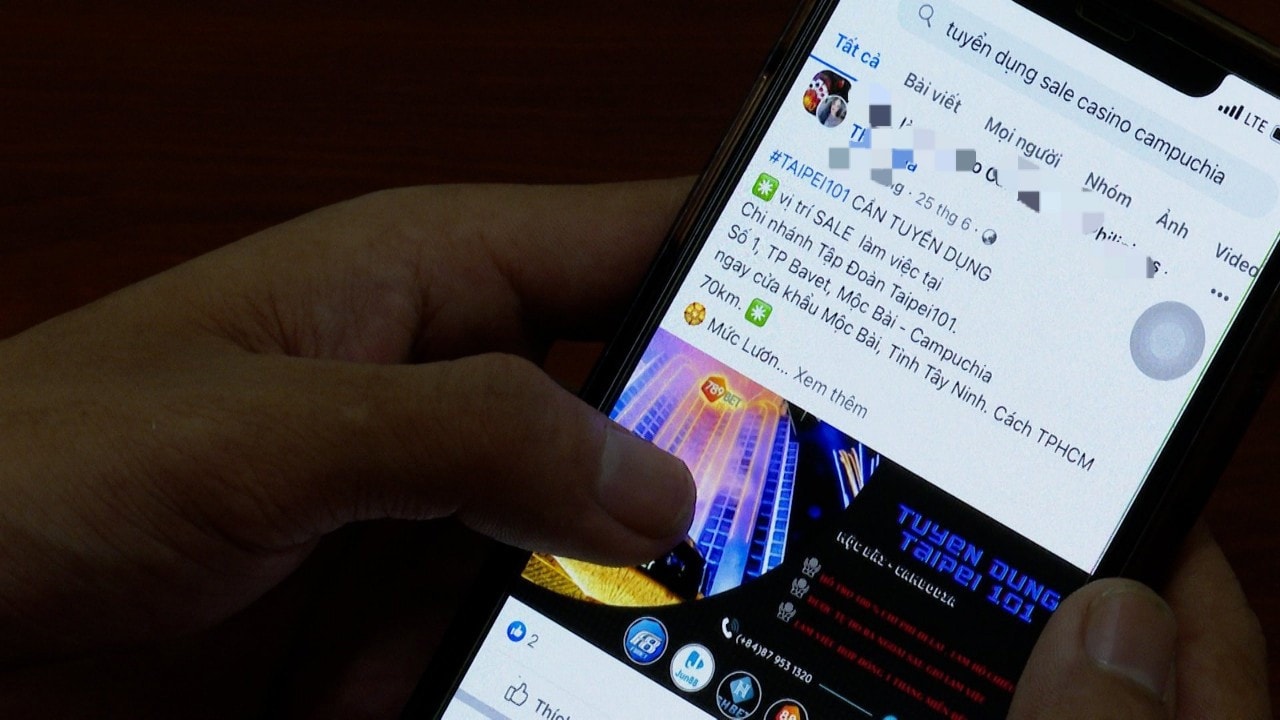
Photo by: The Congress Office
These advertisements deliberately target economic desperation, offering “high-paying light jobs” with minimal requirements either overseas or in other parts of the country. The promises seem too good to be true because they are, but economic pressures make people vulnerable to such offers.
Young people, particularly those from rural areas with limited internet literacy, are especially susceptible. They may not recognize the warning signs of trafficking recruitment, such as vague job descriptions, requests for passport surrender, or pressure to travel immediately.
However, these positions frequently lead to victims being trafficked into sensitive service industries or labor-intensive establishments such as factories, mines, and fishing boats, where they are subjected to low wages and exploitation.21
Cambodia has emerged as a major destination for Vietnamese forced participation in online fraud operations. The country’s special economic zones, particularly those near the Thai border, house massive compounds where victims are forced to work at call centers, running romance scams, cryptocurrency fraud, and other online crimes. Victims report being confined in guarded compounds, beaten for not meeting quotas, and forced to pay fabricated debts to secure release. The international nature of these operations, combined with weak law enforcement in some areas, makes rescue extremely difficult.22
The vulnerable groups
From 2011 to 2020, 90% of the 7,356 human trafficking victims rescued by government authorities were women and children. The majority of these victims came from remote, economically disadvantaged rural areas, and more than 80% were ethnic minorities with limited education.23 In recent years, while women and children continue to make up the bulk of trafficking victims, the number of male victims has increased significantly. In 2022, over 50 male victims, including both adults and children, were rescued from exploitation in Cambodia, and 92 individuals exploited on the streets of Hanoi received support from the Blue Dragon Foundation.
Additionally, members of the LGBTQI+ community in Vietnam have also been found to be increasingly vulnerable to trafficking, often facing exploitation due to social stigma.24
Street children also represent a particularly vulnerable population. In the first nine months of 2023, Blue Dragon engaged with 137 children and adults living on Hanoi’s streets, with 37% showing signs of involvement in human trafficking. This statistic highlights the intersection between homelessness, poverty, and trafficking vulnerability in urban settings.25
6. Root Causes: Why Vietnam Remains Vulnerable
Vietnam’s “Tier 2” ranking on the U.S. State Department’s Trafficking in Persons Report 202426 represents an improvement from its 2023 ranking, indicating that the country is making significant efforts to combat trafficking while not fully meeting minimum standards for elimination as prescribed by the U.S. Trafficking Victims Protection Act. Several interconnected factors contribute to this ongoing vulnerability.
| Note: The U.S. Trafficking in Persons (TIP) Report classifies countries into four tiers reflecting the magnitude of their anti-trafficking efforts: Tier 1 represents full compliance with minimum standards, Tier 2 includes countries making significant efforts but still falling short, Tier 2 Watch List flags additional concerns, and Tier 3 applies to nations making no significant effort and facing potential sanctions. Globally, only about a quarter of countries achieve Tier 1 status, with most falling into Tier 2 or the Watch List—underscoring that the majority of nations have not yet fully met the minimum standards to combat human trafficking. |
Economic Factors
Poverty and Lack of Employment Opportunities: Despite impressive economic growth nationally, rural and ethnic minority areas remain significantly under-developed, comparatively to urban centres. Meaning a significant portion of Vietnam’s population is economically vulnerable to impoverishment with limited job prospects. This heightened vulnerability exposes them to human trafficking as people seek any economic opportunity for a better life. Already the informal economy employs 55% of the workforce, creating precarious employment situations of which traffickers exploit.27 The wage gap between Vietnam and destination countries creates powerful incentives for migration. When legitimate local opportunities are scarce, people become more willing to take risks on suspicious job offers that promise dramatically higher earnings abroad.Geographic Vulnerabilities: Vietnam’s extensive border with China, Laos, and Cambodia, combined with numerous informal crossing points, roads and shortcuts, facilitate trafficking operations. The mountainous terrain and remoteness of border areas provide cover for criminal networks.28
Social and Cultural Factors
Gender Inequality: Women and girls are particularly vulnerable to human trafficking due to deep-rooted gender inequality and their lack of power in society.29 According to the Government’s 2023 report on implementing the national gender equality goals, 82.3% of domestic violence victims in Vietnam were female.30 As a result, many women seek to escape abusive situations, often leaving their homes in search of a better life. Unfortunately, this desire to flee makes them easy targets for human traffickers who exploit their desperation.
Information and educational gaps: Many individuals lack the necessary knowledge and awareness about the risks of human trafficking due to low levels of education and insufficient information about fraudulent schemes, which makes them susceptible to scams and further exploitation.31 This issue is especially prevalent in ethnic minority communities, where access to information is limited and language barriers may exist. Additionally, adolescents and minors are particularly susceptible to becoming victims due to their naivety and gullibility.
Culture practices: Certain cultural practices and traditions, such as early and informal marriages and strong family obligations, heighten the vulnerability of women and children, increasing the risk of exploitation and trafficking.32
Demand for Labor and Prostitution: The high demand for cheap labor and prostitution in neighboring countries, particularly China, has significantly contributed to the rise in human trafficking. Criminal networks exploit digital technology, using financial incentives as bait. Through a network of brokers, traffickers target individuals seeking overseas employment, offering low-cost labor opportunities with high salaries and simple procedures. Once these individuals are lured abroad, they are sold into forced labor, often under brutal conditions.33
Legal and regulatory challenges
Enforcement Gaps: While the Vietnamese government has implemented various programs and policies to combat human trafficking, significant gaps remain that need to be addressed. The lack of legal uniformity and consistency, coupled with discrepancies between related laws, complicates both the implementation and enforcement of these measures. Although the number of victims receiving government support has increased, there is still a notable deficiency in identifying victims, especially in the context of growing online fraud activities. Crime prevention efforts remain ineffective due to the absence of detailed statistics on human trafficking cases and a lack of clear legal guidance for enforcement.34
Digital Regulation Deficits: The rapid growth of online recruitment has outpaced regulatory responses. Social media platforms operate with minimal oversight, allowing fraudulent job advertisements to proliferate. The international nature of many digital platforms creates jurisdictional challenges that traffickers exploit to avoid accountability.
7. Multidimensional impact beyond individual suffering
Human trafficking in Vietnam has far-reaching, multi-dimensional consequences, affecting not only the physical and mental well-being of victims but also societal security, public order, and the nation’s long-term economic stability.
Individual impacts
Trafficking victims often endure physical and psychological trauma that can persist long after rescue. Significant physical deterioration and lasting injuries come from forced labor, sexual exploitation, physical abuse, illegal confinement, and harsh working conditions. In addition to these physical harms, survivors face severe psychological impacts, including stress, anxiety, depression, and post-traumatic stress disorder (PTSD). The emotional toll of their experiences leads to a profound loss of trust, persistent fear, and difficulties in reintegrating into society after rescue.35
Social Impacts
Human trafficking severely disrupts social stability, creating confusion and anxiety within communities, particularly in border regions. Human trafficking is a criminal activity run by dangerous persons and crime syndicates. For these operations to exist there are often opportunistic middle persons who act as recruitment agents locally–having the trust of the community or even being relatives–these local perpetrators fuel social instability, fracture families, and leave victims and their loved ones in vulnerable, precarious situations. This erodes trust within communities and exacerbates challenges in building social cohesion.36
Economic Impact
Human trafficking leads to the depletion of local labor resources and diminishes the overall diversity of the workforce, thereby hindering labor productivity and limiting opportunities for economic development.37 If bribery and indentureship is involved it leaves individuals and families indebted to secure the return of their loved ones, further exacerbating economic insecurity. The costs associated with prevention including, investigating, rescuing, and post care to victims, requires a significant allocation of the state budget, and currently is under-resourced. Additionally, the trauma victims have faced often leaves them unable to reintegrate into society, further reducing their long-term contributions within the workforce and economy.
8. Current response efforts
Vietnam has implemented various measures to combat trafficking, achieving mixed results across different areas of intervention.
Government initiatives
Building and Strengthening the Legal Framework
Vietnam has enacted the Law on the Prevention and Combat of Human Trafficking (2011), along with several guiding documents to support its implementation.38 In 2024, the Ministry of Public Security proposed amendments to the law to address existing gaps and incorporate additional provisions to enhance the consistency and effectiveness of the legal system.39 Since 2021 the government continues to advance the National Program on the Prevention and Combat of Human Trafficking, with a focus on crime prevention, law enforcement, victim protection, and support.40
Enhancing International and Regional Coordination
Vietnam actively participates in both bilateral and multilateral agreements with neighboring countries such as Laos, Cambodia, and China.41 Additionally, the country cooperates with ASEAN and international organizations to share information, provide training for law enforcement personnel, and assist in the rescue and repatriation of trafficked victims.42
Improving Law Enforcement Capacity
The Vietnamese government has committed to strengthening the capacity of its law enforcement agencies. This includes enhancing training programs and equipping the police, border guards, customs officers, and other relevant officials with the skills necessary to identify and combat human trafficking. In parallel, efforts are being made to improve public awareness through community education and outreach campaigns.43
Non-Governmental Organization contributions
Supporting Victim Reintegration and Recovery:
Organizations such as Blue Dragon Children’s Foundation, Pacific Links Foundation, and Hagar International play a pivotal role in helping survivors of human trafficking rebuild their lives. They provide comprehensive support, including psychological counseling, medical care, legal assistance, vocational training, and long-term livelihood opportunities, all aimed at facilitating the reintegration of victims into their communities.
An example of NGOs works in Vietnam
Raising Public Awareness:
Non-governmental organizations (NGOs) regularly conduct communication campaigns, seminars, and educational programs across schools and local communities to raise awareness about the dangers of human trafficking. These efforts are designed to educate the public on recognizing trafficking tactics and reduce the likelihood of individuals becoming victims.
Supporting the Policy-Making Process:
NGOs contribute to improving policies and laws related to human trafficking through research, providing valuable data, and offering expert advice. By proposing more effective intervention strategies, these organizations help strengthen the response to human trafficking at both the national and international levels.44
9. Future direction and Recommendations
Addressing human trafficking in Vietnam requires confronting several persistent challenges while building on existing strengths and developing new approaches.
- Enhance the legal framework and regularly update it to adapt to the evolving trafficking context and evolving criminal landscape.
- Strengthen the effectiveness of inter-sectoral and inter-regional cooperation by fostering close connections between governments, non-profit organizations, businesses, and local communities.45
- Cross-Border Coordination: Trafficking operations span multiple countries, requiring enhanced international cooperation. Current mechanisms often prove inadequate for addressing fast-moving criminal networks.
- Leveraging Technology and Innovation: Promote the use of technology and artificial intelligence for monitoring, data analysis, and early detection of online platforms used to recruit victims.
- Invest in access to education particularly for ethnic minorities, women, children, and other vulnerable groups. Education and overall literacy will improve people’s knowledge, legal awareness, life skills and digital literacy, helping them to protect themselves against fraud and scams, as well as increasing their economic opportunities.
- Victim-Centered Approaches: Too often, trafficked victims are treated as criminals rather than survivors deserving support. Legal frameworks must better distinguish between traffickers and their victims. Comprehensive support services that address the long-term needs of survivors, including psychological counseling, medical care, legal assistance, and economic reintegration support, are essential for successful recovery and prevention of re-trafficking.
10. Conclusion
Human trafficking in Vietnam represents a complex, multifaceted challenge that demands a comprehensive and adaptive strategy. While the country has made significant strides in legal frameworks and international cooperation, the problem continues to evolve faster than institutional responses. The shift from traditional cross-border trafficking to sophisticated digital operations demonstrates criminal networks’ adaptability. Similarly, anti-trafficking efforts must become more agile, leveraging technology for prevention and detection while maintaining focus on victim protection and support. Success in combating trafficking requires synchronized efforts across multiple sectors and levels. Government bodies, non-governmental organizations, communities, and media must work together to address both immediate trafficking situations and underlying structural vulnerabilities. Only through such coordinated approaches can Vietnam hope to combat trafficking effectively, ensuring a safer, more equitable society where human rights are respected and protected for all citizens.
References
- 1. United Nations Office on Drugs and Crime. 2024. Global Report on Trafficking in Persons 2024. Accessed in July 2025
- 2. United Nations Office on Drugs and Crime. Human trafficking. Accessed in July 2025
- 3. European Commission. Definition of trafficking in human beings. Accessed in July 2025
- 4. United Nations Office on Drugs and Crime. Human trafficking. Accessed in July 2025
- 5. United Nations Office on Drugs and Crime. 2024. Global Report on Trafficking in Persons 2024. Accessed in July 2025
- 6. 19 Countries covered in the East Asia and Pacific Region in the Global Report on Trafficking in persons 2024, including Australia, Brunei Darussalam, Cambodia, China, Cook Islands, Fiji, Indonesia, Japan, Malaysia, Marshall Islands, Mongolia, Myanmar, New Zealand, Paula, Philippines, Republic of Korea, Singapore, Thailand, Tonga. (Vietnam is not included)
- 7. UN Women, ILSSA, CEMA. 2021. Policy Discussion: The Impact of the COVID-19 Pandemic on Ethnic Minorities in Viet Nam. Accessed in July 2025.
- 8. Chris Humphrey. 2023. Traffickers switch to Myanmar after China erects border fence. Al Jazeera. Accessed in July 2025.
- 9. Ethnicity and Development News. 2021. Together Taking Action to Push Back the Problem of Human Trafficking. Accessed in July 2025.
- 10. Blue Dragon Children’s Foundation. 2024. Human trafficking in post-Covid Vietnam. Accessed in July 2025.
- 11. UK Home Office. 2025. Country Policy and Information Note: Trafficking, Vietnam, February 2025. Version 6.0. Accessed in Jully 2025.
- 12. Blue Dragon Children’s Foundation. 2024. Human trafficking in post-Covid Vietnam. Accessed in July 2025.
- 13. Ibid.
- 14. U.S. Embassy Vietnam. 2021. 2021 Trafficking in Persons Report. Accessed in July 2025.
- 15. Ibid.
- 16. Blue Dragon Children’s Foundation. 2022. Profile of trafficking in Vietnam. Accessed in July 2025.
- 17. VTV. 2022. Human trafficking: From light work, high salary to serving criminals. Accessed in July 2025.
- 18. The Golden Triangle is a mountainous region in Southeast Asia where the Mekong and Ruak rivers converge along the borders of Thailand, Laos, and Myanmar (Burma). Some definitions of the region include parts of northern Vietnam and Yunnan province, China. Source: Encyclopedia Britannica
- 19. Vietnam News Agency. 2023. Victims of Human Trafficking and Stolen Lives. Accessed in July 2025.
- 20. People’s Deputies Online. 2022. Warning about the fraud tactic of ‘easy jobs with high pay’ in Cambodia. Accessed in July 2025.
- 21. Vietnamese National Assembly. 2023. Parliamentary session on human trafficking prevention. Accessed in July 2025.
- 22. Vietnamnet. 2023. The rescuer who ransomed hundreds of victims from ‘ghost companies’ in Cambodia. Accessed in July 2025.
- 23. Ministry of Justice, Vietnam. 2020. Summary report on 9 years of implementing the Law on Prevention and Combat of Human Trafficking. Accessed in July 2025.
- 24. U.S. Department of State. 2023. Trafficking in Persons Report 2023: Vietnam. Accessed in July 2025.
- 25. Blue Dragon Children’s Foundation. 2024. Human trafficking in post-Covid Vietnam. Accessed in July 2025.
- 26. U.S. Department of State. 2024. Trafficking in Persons Report 2024. Accessed in July 2024.
- 27. U.S. Department of State. 2023. Trafficking in Persons Report 2023: Vietnam. Accessed in July 2025.
- 28. Vietnamese National Assembly. 2023. Parliamentary session on human trafficking prevention. Accessed in July 2024
- 29. Vietnamnet. 2017. Poverty and Lack of Information, Many Women Become ‘Commodities. Accessed in July 2025.
- 30. Vietnam News. 2024. Việt Nam’s efforts to eliminate violence against women. Accessed in July 2025
- 31. Ministry of Justice, Vietnam. 2020. Summary report on 9 years of implementing the Law on Prevention and Combat of Human Trafficking. Accessed in July 2025.
- 32. VTV. 2023. Human Trafficking Crimes: Increasingly Sophisticated Tactics, Sharp Rise in Male Victims. Accessed in July 2025.
- 33. Vietnamnet. 2022. Ministry of Public Security warns about the scam tactic of ‘easy jobs with high pay’ abroad”. Accessed in July 2025.
- 34. U.S. Department of State. 2023. Trafficking in Persons Report 2023: Vietnam. Accessed in July 2025.
- 35. Vietnam News Agency. 2023. Victims of Human Trafficking and Stolen Lives. Accessed July 2025.
- 36. Vietnamese National Assembly. 2023. Parliamentary session on human trafficking prevention. Accessed in July 2025.
- 37. Blue Dragon Children’s Foundation. 2024. Human trafficking in post-Covid Vietnam. Accessed in July 2025.
- 38. Government of Vietnam. 2011. Law on the Prevention and Combat of Human Trafficking. Accessed in July 2025.
- 39. Nhan Dan News. 2024. Draft amendments to Law on Prevention and Combat of Human Trafficking. Accessed in July 2025.
- 40. Government of Vietnam. 2021. National Program on the Prevention and Combat of Human Trafficking 2021-2025. Accessed in July 2025.
- 41. Nhân Dân news. 2024. Strengthening Defense Cooperation among Vietnam, Laos, and Cambodia. Accessed in July 2025.
- 42. Tin tức News. 2023. Vietnam and the International Community: Efforts to Prevent and Combat Human Trafficking. Accessed in July 2025.
- 43. Vietnam Plus. 2024. Enhancing capacity for border guards on anti-trafficking. Accessed in July 2025
- 44. https://hagarinternational.org/vietnam/; https://pacificlinks.org/; https://www.bluedragon.org/
- 45. Nhân Dân News. 2024. Support and Protection of the Rights of Human Trafficking Victims. Accessed in July 2025.

